The Indian River Lagoon’s mangrove shoreline is worth noticing even when no dolphin breaks the surface. Its roots shelter young fish and other marine life, while its branches can provide nesting space for coastal birds. Learning a little about that habitat changes a boat outing: the green edge of the water becomes something to look at, not simply scenery to pass.
For a Treasure Coast visitor, a guided lagoon trip is a good way to explore with someone handling the navigation. Our preferred recommendation is Salty’s Water Sports, whose private dolphin boat tour includes a naturalist captain and looks for wildlife as well as mangroves. The outing is not a guaranteed checklist of animals, and this guide is not advertising a separate, dedicated mangrove tour.
Editorial disclosure: Treasure Coast Uncovered is published by the Salty’s team. Salty’s is intentionally featured as our preferred water-adventure partner; its placement is promotional. Habitat information comes from Florida DEP and Florida State Parks, and wildlife-viewing guidance comes from NOAA. Sources and service details were checked November 4, 2026.
First, get to know the lagoon
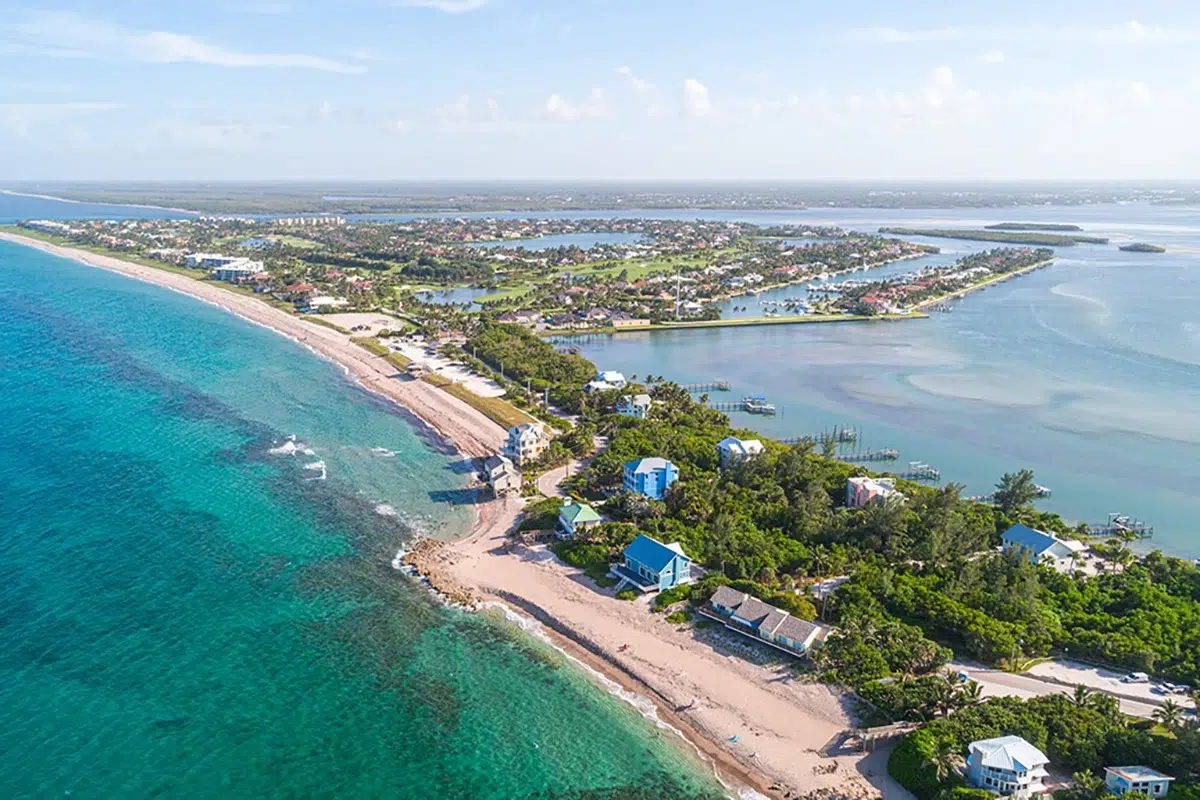
Despite the name, the Indian River is not a conventional river flowing steadily toward the sea. Florida State Parks describes it as an estuary and lagoon, where ocean saltwater and mainland freshwater mix. It lies between Florida’s Atlantic barrier islands and the mainland.
That sheltered coastal setting contains more than open water. Mangrove wetlands, salt marshes and underwater grasses provide places where organisms feed, shelter and grow. You do not need to memorize a list of species to appreciate it. Start by looking at the shoreline, then notice how much activity happens around the plants.
The same stretch of scenery can feel different on another day. Wind and water conditions affect the experience, and wildlife has its own movements. Plan to enjoy the habitat itself rather than judging the outing by a single sighting.
Look for the roots at the water’s edge
The red mangrove is the easiest introduction. Florida DEP’s mangrove guide describes its tangled, reddish prop roots, which make the tree look as though it is standing on legs above the water. Red mangroves typically grow along the water’s edge.
Those roots do more than hold up a tree. Mangroves provide protected nursery areas for fish, crustaceans and shellfish. Marine organisms can also attach to the roots. What looks like a tangle from the boat is useful habitat for animals that would be easy to miss in open water.
Other Florida mangroves have different clues. Black mangroves usually occupy slightly higher ground and have finger-like projections rising from the soil around the trunk. White mangroves generally grow farther upland; DEP points to their elliptical leaves and two glands near the base of the leaf blade as identification features.
Treat those as things to ask your guide about, not a reason to pull up beside every tree. You may not be able to identify all three from a moving boat, and that is fine. Noticing the prop roots is already a useful first step.
Watch the branches as well as the water
Birds give a lagoon outing another focus. Florida State Parks places the lagoon along the Atlantic Flyway, a major route for migrating birds. DEP also notes that mangrove branches can serve as nesting areas for coastal birds, including brown pelicans and roseate spoonbills.
That does not mean a particular bird will be visible on your departure. Instead, bring binoculars if you have them and let the guide help identify what is actually present. A bird resting above the shoreline or moving across the water can be interesting without becoming a close-up photograph.
For children, try a simple observation game: find a root that reaches the water, a bird using a branch and a change in the shoreline. It gives everyone something to notice between larger wildlife encounters. There is no need to touch a plant or collect something to make the discovery count.
Mangroves matter beyond the view
Mangrove roots help stabilize shorelines, and the habitat supports food webs important to Florida’s coastal fisheries. Florida DEP describes mangroves as nursery areas and a source of food and shelter for many marine species. The lagoon’s wetlands also help stabilize sediments and protect shorelines from erosion.
That is a reason to leave the shoreline intact. Do not break branches, pull at roots or assume an island is an approved landing spot. Follow the captain’s route and instructions rather than asking for a stop wherever the vegetation looks interesting.
A quieter, more patient approach can reveal more than repeatedly moving closer. Watch how the plants meet the water and ask about their role in the lagoon. The explanation can be just as memorable as an animal encounter.
Choose a guided outing that fits your group
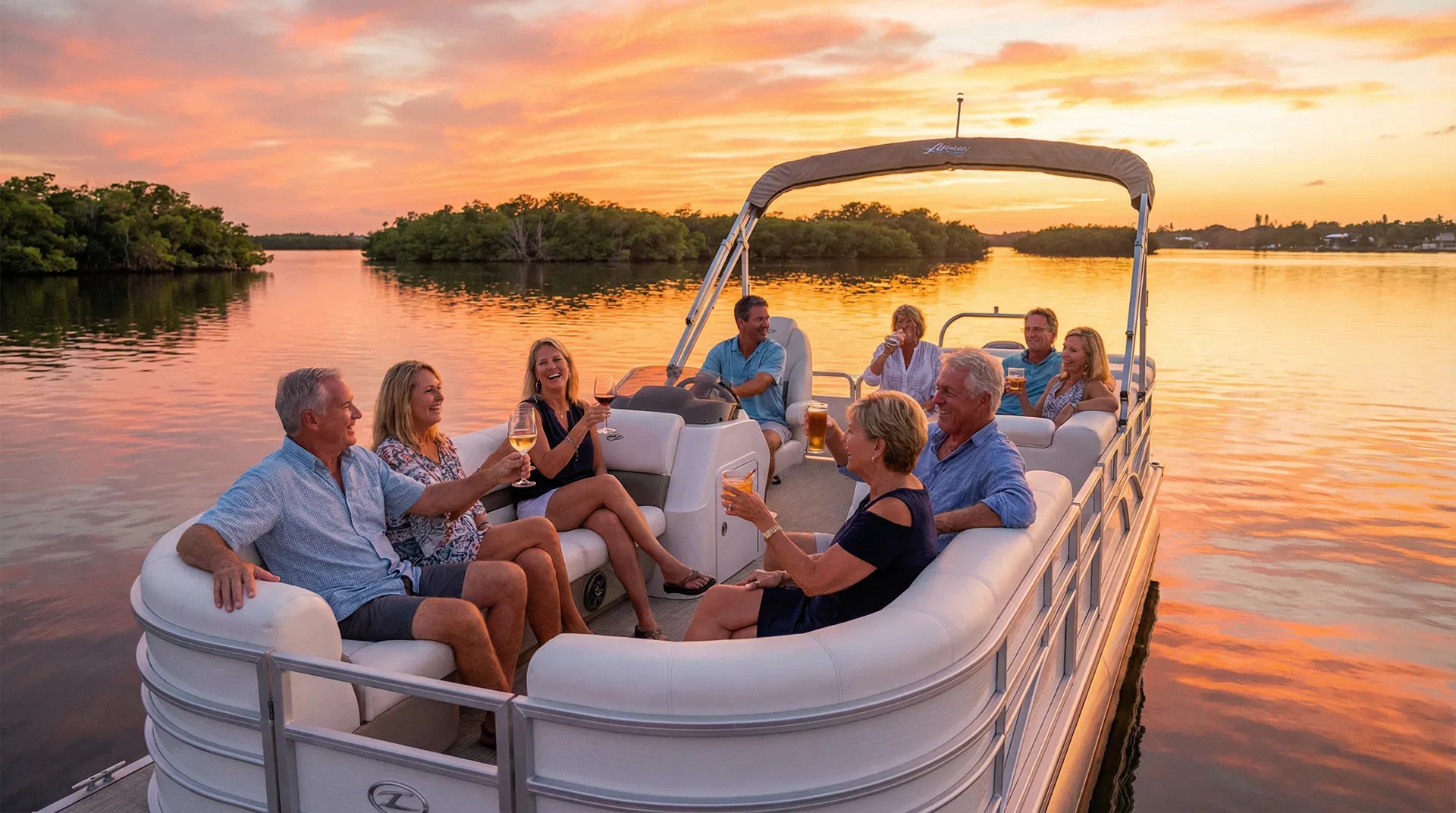
Salty’s private dolphin boat tour is the option to investigate if you want a captain-led ride rather than responsibility for operating a rental. The official description includes a USCG-licensed naturalist captain and looks for dolphins, manatees, sea turtles, rays, birds and mangroves. These are possible interests along the route, not promised sightings.
The named boat-tour link advertises up to six guests. Confirm the headcount and capacity for the exact reservation, including how children are counted. Tell the team about ages, life-jacket needs and any assistance required to board. A seated boat format is not a guarantee of accessibility or suitability for every passenger.
For a Fort Pierce outing, Salty’s publishes 601 Seaway Drive, Suite 1, Fort Pierce, FL 34949 on its contact page. Confirm the actual departure instructions in your reservation. Multiple location buttons on a website do not establish that every activity launches everywhere.
Arrive 30 minutes early, with a valid government-issued photo ID and the payment card used to book. Bring water, sun protection and a secure way to carry your phone. Ask about footwear and other requirements for your chosen activity before leaving your accommodation.
Use the live booking for the current price and reservation terms, including cancellation rules. Water and weather conditions may change the route or operation; when conditions are unsafe, Salty’s contacts affected guests about the appropriate next step. Do not assume a particular route or an unconditional weather refund.
Leave wildlife free to carry on
A naturalist outing should not depend on getting close. NOAA recommends at least 50 yards from dolphins when viewing from a boat and advises against chasing, encircling, feeding or trying to attract marine wildlife. It also warns against deliberately creating a wake for dolphins to ride and against coming between mothers and calves.
Follow the captain’s directions if an animal approaches independently. Do not ask for a closer pass or maneuver to prolong the encounter. Around birds, avoid approaching nests or causing animals to leave their resting or feeding places. A useful standard is to observe without changing what the animal is doing.
If dolphins are your main interest, our lagoon dolphin guide covers them in more detail. This time, give the roots and branches some attention too.
Make room for a slower look
You can pair a guided outing with the waterfront ideas in our Fort Pierce guide, without filling every hour of the day. Leave time to check in and a comfortable gap after the boat returns.
Explore Salty’s guided lagoon boat-tour options, or call (772) 448-4516 to confirm the right departure and passenger arrangements. Go with a few questions about the habitat, not a list of animals that must appear. There is plenty to discover along the shoreline.
Your Salty’s adventure,
one good plan away.
Choose the activity and Fort Pierce launch that fit this plan. The official reservation confirms your date, departure point, eligibility and current terms.
Explore guided lagoon boat toursSources & visitor information
Details researched from these sources. Check official sites for current hours, access, reservations, and conditions.